
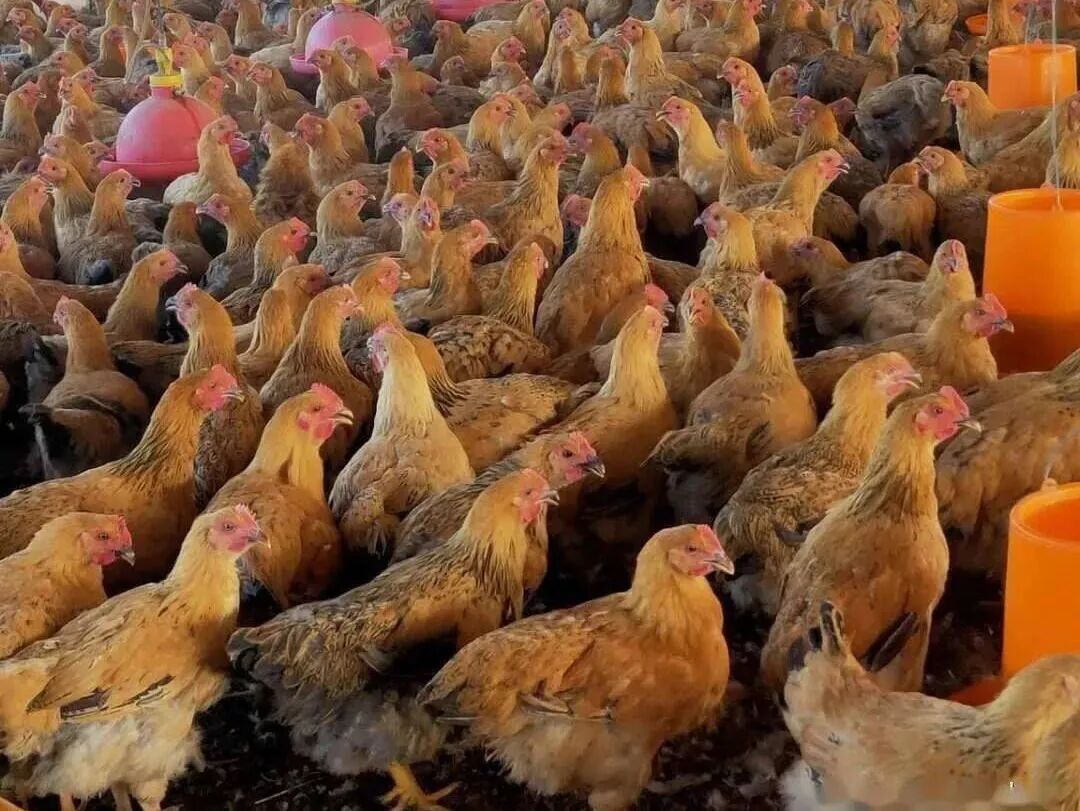
In summer high-temperature seasons, 75-90 day-old growing free-range chickens face the highest heat stroke risk in the whole breeding cycle. Free-range chicken heat stroke featured with limb paralysis, persistent watery droppings, rapid panting and coma has become the top fatal disease for outdoor stocked flocks. Different from caged poultry, free-range chickens expose to direct sunlight, high ground temperature and stuffy bush environment all day long.
Once the ambient temperature exceeds 32℃, 80-day-old chickens with imperfect thermoregulation system will suffer from electrolyte disorder, nerve paralysis and intestinal mucosal failure, resulting in sudden leg weakness, inability to stand, clear watery feces, sharp feed refusal and high mortality within 2-6 hours. As a professional foreign trade manufacturer specializing in poultry veterinary products, functional feed additives and custom poultry premix feed, AGOVEE summarizes field verified emergency schemes based on 10 years of free-range poultry health service experience. This article analyzes onset mechanism, hazard characteristics, wrong rescue operations and standardized emergency solutions, helping global free-range farms rescue affected chickens efficiently and reduce summer breeding losses.
1. Why 80-Day-Old Free-Range Chickens Easily Get Paralyzed With Watery Droppings From Heat Stroke
First, special physiological development defects. 80-day-old growing chickens complete feather replacement but lack mature sweat glands, relying only on respiratory panting for heat dissipation. High temperature will cause sharp loss of potassium, sodium and calcium ions in the body, triggering poultry electrolyte imbalance, peripheral nerve conduction failure and limb flaccid paralysis, which is the direct cause of paralyzed chickens in hot weather. Second, heat-induced intestinal osmotic disorder. Continuous high temperature destroys intestinal villi structure, accelerates intestinal water exudation, stops nutrient absorption, and forms large-volume odorless watery droppings, different from bacterial infectious diarrhea with sticky bloody feces.
Third, free-range environmental exacerbation factors. Outdoor bare land temperature can reach 45℃ above at noon, lack of effective ventilation, random stocking density and dirty drinking water aggravate oxidative stress. Long-term heat stress elevates serum cortisol level, suppresses poultry immune function, makes chickens fall into a vicious cycle: heat stress-electrolyte loss-paralysis-watery diarrhea-body exhaustion-death. This onset rule is the core basis of AGOVEE targeted heat rescue product formula design.
2. Invisible Breeding Losses Caused By UntreatedFree-Range Chicken Heat Stroke
3. Common Wrong Rescue Operations That Increase Chicken Mortality
Firstly, ultra-low temperature rapid cooling. Spraying ice water or placing paralyzed chickens in air-conditioned room directly causes vascular contraction and body shock, aggravating nerve paralysis and cardiac failure. Standard cooling requires natural shade ventilation plus normal-temperature water mist humidification. Secondly, blind oral antibiotics. Watery droppings caused by heat stress have no pathogenic bacteria, antibiotics will kill intestinal beneficial flora, worsen intestinal exudation and diarrhea condition. Thirdly, single calcium supplement for paralyzed chickens. Heat paralysis is caused by electrolyte loss instead of calcium deficiency, pure calcium premix cannot relieve limb weakness fundamentally.
4. AGOVEE Standard 4-Step Emergency Plan + Special Products For 80-Day-Old Free-Range Chickens
Aiming at free-range chicken paralysis and watery droppings caused by heat stroke, AGOVEE launches exclusive summer emergency supporting products and field 4-step rescue protocol, matched with independent-developed compound additives and growing-stage poultry premix feed, realizing first aid within 30 minutes and full recovery within 24 hours, suitable for all outdoor chicken stocking scenarios worldwide.
Step 1: On-site gentle physical first aid. Transfer paralyzed, panting chickens to 26-28℃ shaded ventilation area, wet comb, wattles and sole foot with normal temperature water, avoid wetting chicken chest and abdomen to prevent visceral cold stimulation.
Step 2: Group drinking intervention with AGOVEE High-Efficiency Electrolyte Antioxidant Additive. This core hot-selling additive integrates vitamin C, vitamin E, chelated potassium sodium magnesium and natural mint plant extract. It can rapidly balance body electrolyte, repair heat-damaged nerve tissue, relieve limb paralysis, stop watery intestinal exudation effectively, and improve chicken mental state within half an hour. Different from common ordinary electrolyte powder, AGOVEE formula adds anti-oxidation factors to reduce cortisol content, eliminate body oxidative damage, with no irritation and zero drug residue.
Step 3: Intestinal repair and diarrhea stabilization. Add AGOVEE probiotic intestinal protection additive to group drinking water, aiming at watery droppings sequelae. It colonizes intestinal tract quickly, repairs heat-stressed intestinal villi, restores water absorption capacity, cuts off recurrent watery feces, improves poultry feed digestibility, and restores normal feeding intake of affected chickens.
Step 4: Daily herd prevention management. Replace conventional growing feed with AGOVEE customized 80-day free-range chicken heat-resistant premix feed. The formula optimizes trace elements and heat-resistant plant essence proportion, enhances flock natural heat dissipation ability, reduces heat stroke outbreak probability fundamentally, and ensures stable daily weight gain in high-temperature summer.
Verified by Southeast Asia, Africa and South America free-range pastures, for mildly paralyzed chickens, combined AGOVEE products can realize standing recovery in 4-8 hours and complete stop of watery droppings in 12 hours; for severe coma chickens, the survival rate can be improved by 83% after standardized first aid. All AGOVEE poultry veterinary drugs and feed additives comply with EU export inspection standards, safe for meat chicken feeding period, no withdrawal period, suitable for long-term summer group prevention and sudden emergency treatment.
Please give us a message