
In the intensive world of livestock production, achieving rapid weight gain and high milk yields often requires a delicate balancing act of nutrition. However, the pursuit of maximum performance can sometimes push the animal’s physiology to its breaking point. One of the most critical and potentially fatal conditions facing modern producers is Acute Ruminal Acidosis. This digestive catastrophe, commonly affecting both Cattle and Sheep, can devastate a flock or herd within hours if not properly managed.
At Agovee, we are committed to the science of Rumen Health. We recognize that the rumen is not just an organ; it is a complex, living ecosystem that serves as the engine of ruminant productivity. By combining innovative Nutritional Management with advanced biotechnological additives, Agovee provides the definitive defense against Digestive Disorders in Livestock. In this guide, we delve into the causes, symptoms, and the Agovee strategic approach to preventing and treating ruminal acidosis.
I. What is Acute Ruminal Acidosis?
Acute Ruminal Acidosis, often termed "grain overload" or "rumen lactic acidosis," is a metabolic disease that occurs when ruminants consume excessive amounts of highly fermentable carbohydrates. These starches and sugars—typically found in grains like corn, wheat, and barley—are rapidly fermented by rumen bacteria.
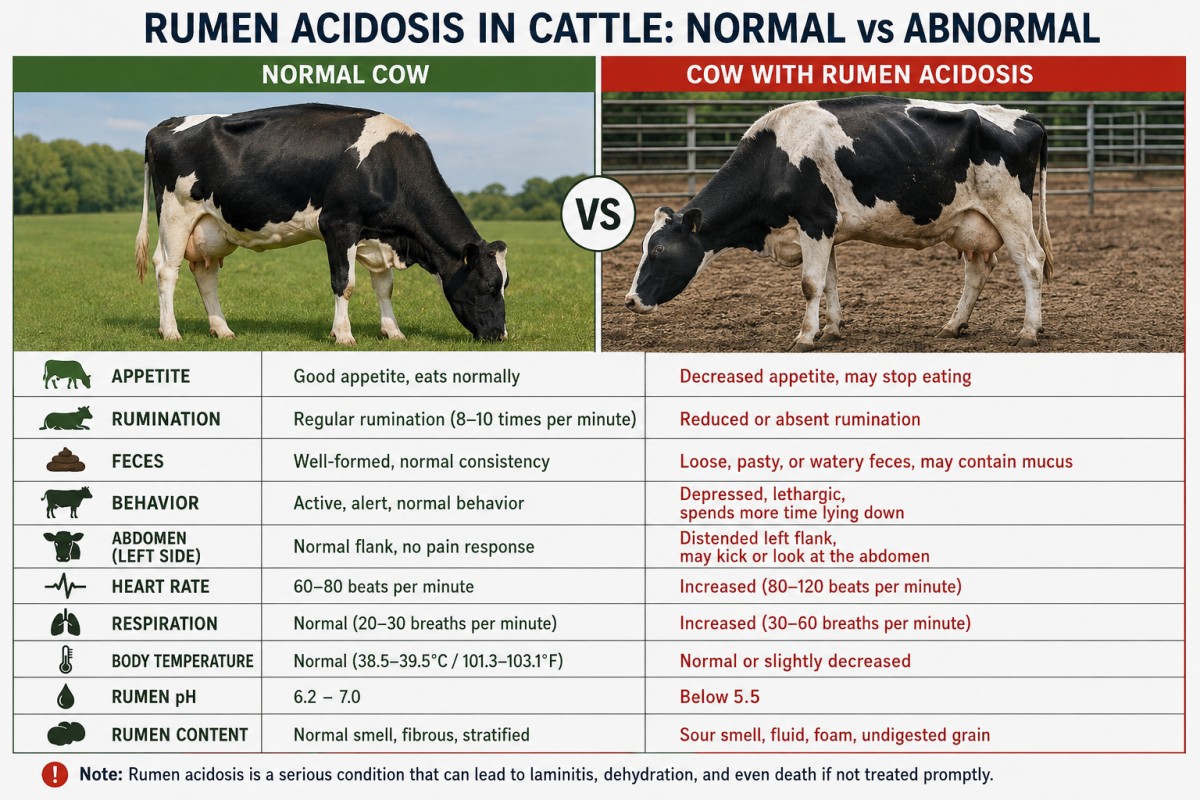
This rapid fermentation leads to a massive production of lactic acid. Under normal conditions, the rumen maintains a pH between 6.0 and 7.0. However, during an acute episode, the pH can plummet below 5.0. This acidic environment is toxic to the beneficial fiber-digesting bacteria and the rumen wall itself, leading to systemic inflammation, dehydration, and frequently, death. For farmers, this represents a severe threat to Livestock Productivity and animal welfare.
II. Root Causes: Why Does Acidosis Occur?
The etiology of Acute Ruminal Acidosis in Cattle and Sheep is almost always linked to errors in Nutritional Management. Agovee technical research identifies three primary triggers:
1. Sudden Dietary Transitions
The rumen microflora requires time to adapt to changes in feed. If an animal is moved from a high-forage diet to a high-concentrate diet too quickly, the population of lactic-acid-utilizing bacteria cannot grow fast enough to neutralize the sudden surge in acid production.
2. Excessive Grain Intake (Grain Overload)
This occurs when animals accidentally gain access to grain storage or when the concentrate-to-forage ratio is incorrectly balanced in the Total Mixed Ration (TMR). High-energy diets are essential for finishing, but without the "physical fiber" to stimulate chewing and salivation (nature’s buffer), the rumen becomes a ticking time bomb.
3. Poor Feed Processing and Consistency
Finely ground grains ferment much faster than whole or cracked grains. If the particle size of the feed is too small, or if the TMR is not mixed uniformly, "sorting" occurs. Dominant animals will eat the tasty, starchy concentrates first, leaving the fiber behind and triggering an acute acidosis event.
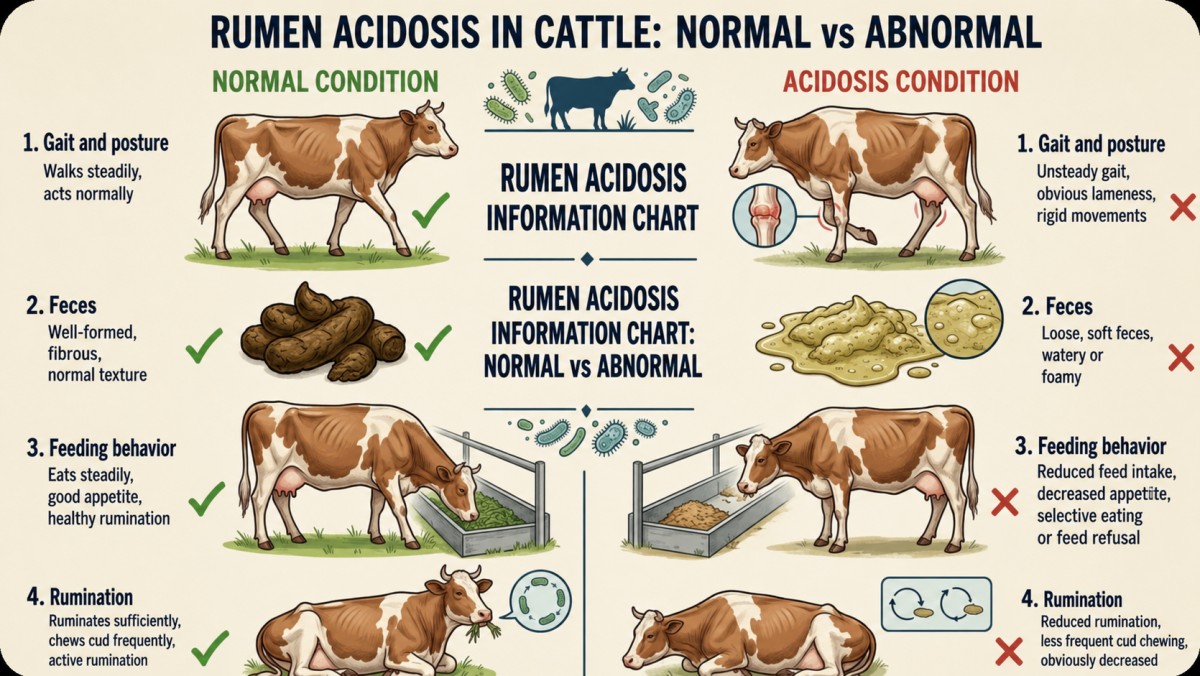
II. Recognizing the Symptoms: Acute vs. Sub-Acute
Early identification of Acute Ruminal Acidosis is vital for successful Livestock Productivity recovery. Agovee experts categorize the clinical signs into two levels:
- Symptoms of Acute Acidosis:
- Sudden Lethargy and Weakness: The animal may appear "drunk" or staggering (ataxia) due to the systemic absorption of toxins.
- Bloat and Abdominal Pain: The left side of the animal may appear distended, and they may kick at their belly.
- Severe Diarrhea: Feces are often liquid, greyish in color, and have a distinctive sweet-sour smell.
- Dehydration: Sunken eyes and loss of skin elasticity are signs that the animal is losing massive amounts of fluid into the rumen.
- Recumbency: In the final stages, the animal will go down and be unable to rise, often moaning in pain.
- Sub-Acute Ruminal Acidosis (SARA):
- While less dramatic, SARA is a "silent killer." It results in reduced feed intake, lower milk fat content, and laminitis (lameness). SARA is a primary focus for Agovee’s daily Nutritional Management programs.
IV. The Agovee Solution: Engineering Rumen Stability
The Agovee philosophy is built on proactivity. While emergency treatment is necessary, our goal is to ensure the rumen never reaches a state of crisis. We have developed a suite of Animal Health Solutions that act as a "metabolic safety net" for your herd.
1. Agovee Rumen-Buffer Max
Traditional buffers like sodium bicarbonate are often short-lived. Agovee Rumen-Buffer Max is a multi-stage buffering agent that provides both immediate and sustained pH stabilization. It ensures that even during peak fermentation times after a meal, the rumen pH remains in the optimal "safety zone" (above 5.8), preventing the onset of Acute Ruminal Acidosis.
2. Agovee Bio-Yeast Pro
To support the biological defense of the rumen, we offer Agovee Bio-Yeast Pro. This live yeast culture specifically stimulates the growth of bacteria that consume lactic acid (Megasphaera elsdenii). By increasing the "acid-eating" capacity of the rumen, Agovee helps Cattle and Sheep adapt to high-energy diets more safely and efficiently.
3. Agovee Gastro-Shield
In the aftermath of an acidic event, the rumen lining (papillae) is often "burnt" or scarred. Agovee Gastro-Shield contains specialized amino acids and organic minerals that accelerate the repair of the intestinal and ruminal mucosa. This ensures that the animal can return to full feed quickly without long-term damage to their absorption capacity.
4. Precision Ruminant Nutrition Consulting
Beyond products, Agovee provides data-driven consulting to optimize your TMR. We help farmers calculate the "PeNDF" (Physically Effective Neutral Detergent Fiber) required to stimulate rumination, ensuring that your Nutritional Management strategy is sound from the ground up.
V. Emergency Treatment and Prevention Protocols
If a case of Acute Ruminal Acidosis is detected, immediate action is required:
- Remove the Source: Immediately stop access to the high-grain feed.
- Oral Alkalinizers: Administer magnesium hydroxide or sodium bicarbonate orally to neutralize the acid.
- Hydration: Use Agovee Electrolyte-Plus to combat dehydration and restore the systemic electrolyte balance.
- Vitamin B1 Supplementation: High rumen acidity destroys Thiamine (B1), which is essential for brain function. Supplementing B1 can prevent "Polioencephalomalacia" (PEM) often associated with acidosis.
For long-term prevention, Agovee recommends:
- Gradual Adaptation: Use a 14-to-21-day transition period when moving to finishing diets.
- Consistent TMR: Use Agovee feed stabilizers to prevent sorting and ensure every bite is balanced.
- Regular Monitoring: Use rumen boluses or observe "cud-chewing" behavior (at least 60% of the flock/herd should be chewing their cud at rest).
VI. The Economic Benefit of Choosing Agovee
Investing in Rumen Health with Agovee is an investment in your farm's bottom line. Acute Ruminal Acidosis doesn't just kill animals; it kills profits through:
- Lower Average Daily Gain (ADG).
- High Culling Rates due to chronic lameness and liver abscesses.
- Wasted Feed Costs from poor digestibility.
Flocks and herds managed with the Agovee protocol consistently show a 10-15% improvement in feed efficiency and a significant reduction in metabolic-related mortality.
VII. Conclusion: Partner with Agovee for Rumen Excellence
The rumen is a powerful but fragile engine. When it is out of balance, the entire production system stalls. Acute Ruminal Acidosis in Cattle and Sheep is a manageable risk when you have the right science on your side.
Through the integration of Agovee's advanced Nutritional Management products and our deep expertise in Ruminant Nutrition, you can push the boundaries of performance while keeping your animals safe, healthy, and productive. Don't leave your rumen health to chance. Choose Agovee—the global leader in livestock digestive excellence.
Contact our technical team today for a comprehensive rumen audit and discover how our Animal Health Solutions can secure the future of your livestock enterprise.
Please give us a message